US Geological Survey
Business Contact
Carl Goodwin
ManagerPhone: (253) 428-3600
Email: c.goodwin@usgs.gov
Contact Information
Phone: (253) 552-1600
Hours: Show
Web: www.usgs.gov
Email: usgsnews@usgs.gov
Facebook Profile: Visit
Twitter Feed: Visit
Instagram: Visit
Bing Maps: Visit
Edit: Edit or Remove
Business Description
The U.S. Geological Survey, established in 1879, is a multidisciplinary science organization known as USGS. It focuses on biology, geography, geology, and geospatial information, collecting, monitoring, analyzing, and providing scientific understanding about natural resource conditions, issues, and problems. As one of the largest water, earth, and biological science and civilian mapping agencies in the United States, USGS provides scientific information to describe and understand the earth, minimize the loss of life and property from natural disasters, and manage water, biological, energy, and mineral resources. The agency also supports programs for conservation of terrestrial and endangered resources, administers a biological informatics program, and operates programs for earthquake, landslide, and volcano hazards, data preservation, and astrogeology. Additionally, USGS operates the National Geospatial Program Office, which facilitates the development of key standards and data models, and maintains a location in Tacoma, Wash.
Employees: 5
Founded: 1989
Questions & Answers
Q1
How long has US Geological Survey been in business?
US Geological Survey has been in business for around 37 years.Q2
What is the phone number for US Geological Survey?
The phone number for US Geological Survey is (253) 552-1600.Q3
How big is US Geological Survey?
US Geological Survey employs around 5 people at this location.Q4
Where is US Geological Survey located?
US Geological Survey is located at 1201 Pacific Ave Ste 450, Tacoma, WA 98402.Q5
What days are US Geological Survey open?
US Geological Survey is open Mon–Fri 7:45 AM–4:15 PM; closed Sat–Sun.Q6
Is there a primary contact for US Geological Survey?
Carl Goodwin (Manager) at US Geological Survey. You can contact Carl Goodwin at email address c.goodwin@usgs.gov.Q7
What is the web address (URL) for US Geological Survey?
The website for US Geological Survey is www.usgs.gov.Q8
How many people are employeed at US Geological Survey?
US Geological Survey has around 5 employees at this location.Q9
Does US Geological Survey have somewhere to park?
Yes, US Geological Survey has street parking available.Additional Businesses at this Address
1201 Pacific Ave Ste 450, Tacoma, WA 98402
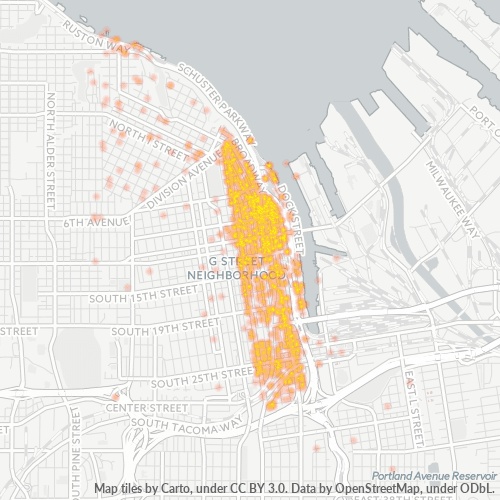
Businesses in Zip Code 98402
Businesses in 98402: 8,271
Population: 5,699
Categories
Professional Services: 22%
Medical: 13%
Shopping: 11%
Other: 54%
Price
Moderate: 58%
Inexpensive: 29%
Expensive: 11%
Very Expensive: 2%
Other: 0%
Area Codes
253: 96%
Other: 4%
Neighborhoods
New Tacoma: 94%
Other: 6%
Stats and Demographics for Zip Code 98402
Race
White: 70%
Black Or African American: 16%
Hispanic or Latino: 5%
Asian: 5%
American Indian Or Alaskan Native: 3%
Native Hawaiian & Other Pacific Islander: 1%
Other: 1%
Gender
Male: 60%
Female: 40%
Other: 0%